EssayJuly 29, 2026
The Demand That Held Them Together
On 16 July 2026 the National Testing Agency published the result of the year’s medical entrance examination. Near the bottom of the release is a list of how many candidates qualified, sorted.
General, 2.91 lakh. OBC-NCL, 5.12 lakh. SC, 1.59 lakh. ST, 63,716. Gen-EWS, 95,026. PwBD, 3,666. PwD, 303.1
Seven categories. One pool. The document does not argue for the sorting or against it. It performs the sorting and prints the result, in the same flat register it uses for the number of examination centres.
Nine days after that list was published, the Union education minister resigned. It was the largest youth mobilisation in years and it had taken seven weeks.
This essay is about how scarcity decides which demands a coalition can make together.
A movement seven weeks old removed a cabinet minister without asking for a single additional seat. The demand it chose was the one every part of it could make without turning on itself, and a fixed number of places is what made that true.
The second essay in this pair sets out the arithmetic underneath all of it: how many places there are, why the number is what it is, and what it would cost to change it.
What was asked for, and what arrived
The sequence is short enough to set out without commentary.
On 15 May 2026, hearing a contempt petition about the process of conferring senior designation in the Delhi High Court, the Chief Justice of India, Surya Kant, spoke about young people entering the legal profession, referring to “youngsters like cockroaches” who were not getting employment in it and who turned to social media and to filing right-to-information requests.2
The following day he clarified. What he had criticised, he said, were “those who have entered professions like the Bar with the aid of fake and bogus degrees. Such persons have sneaked into media, social media, and other noble professions and hence they are like parasites.” He added that “Indian youth have great regard and respect for me, and I too see them as the pillars of a developed India”, said the remark had been misreported, and called for a protocol on how oral observations from the bench are reported.2 That clarification belongs beside the remark wherever the remark appears, and this essay does not treat the two as interchangeable.
By then the word had left the courtroom. On 16 May a political communications strategist named Abhijeet Dipke founded the Cockroach Janta Party, which is not registered with the Election Commission and whose stated constituency is the lazy and the unemployed.3 Demonstrations began at Jantar Mantar on 6 June, with the CJP alongside established student organisations. On 28 June Sonam Wangchuk began an indefinite hunger strike at the site. On 18 July, the twenty-first day of it, police removed him from Jantar Mantar and admitted him to Safdarjung Hospital; Dipke and others began fasting in protest at the removal. On 20 July a march on Parliament was met with baton charges and tear gas, around 150 protesters were hospitalised and about 70 detained, and Wangchuk wrote by hand from the ward that he would continue. On 21 July the Delhi High Court ordered him moved to Medanta Hospital in Gurugram. On 22 July the protests spread to Mumbai, Chandigarh, Surat, Patna, Bengaluru, Hyderabad, Lucknow and Kolkata, and across Kerala.4
On 25 July the education minister resigned. The occupation of Jantar Mantar, which had run since 6 June, was called off, and Dipke thanked the Chief Justice for the remark. His closing words at the site were that this was not the end and that they would meet again soon.5
What arrived over the following two days is also on the record. Education was given to a serving cabinet minister as an additional portfolio. A task force on examination reform was announced under Nandan Nilekani. A Bill was introduced in the Lok Sabha raising the penalties for examination malpractice under an Act passed in 2024, which had been in force when the year’s paper leaked.6
Nobody built a college. Nobody added a seat.
Why the concession came
Why the government gave way at all is a harder question, and I can only guess at it. Nobody outside the room knows what was decided in it, and the reasoning has not been published. Decisions of this kind rarely are.
The guess that best fits the order of events is that suppression was tried first and made the problem worse. A hunger striker on his twenty-first day carried out of a protest site by police. Baton charges and tear gas on the march two days later, about a hundred and fifty people hospitalised. A handwritten note from a hospital ward saying the fast would continue anyway. Protests in eight more cities two days after that. Each of those produced an image better than anything the movement could have staged for itself, and each travelled on exactly the infrastructure the governing party has spent a decade learning to use better than anyone else in Indian politics.
A second element is more speculative still. A political formation that built much of its reach through ridicule is unusually exposed to being ridiculed. Its familiar counter-move is to cast opponents as idle and entitled, and that move has no purchase at all on a movement which has already taken the insult and printed it on its own banner. Calling them lazy was the plan they had adopted for themselves.
The demand that held them together
It is tempting to read that as a movement being fobbed off, and to ask why it settled. The more useful question is why it asked for a resignation in the first place.
A resignation is a strange demand for a movement about examinations. It changes no rule. It creates no capacity. It is a demand about a person, made by people whose problem is a number.
But it has one property that no other available demand had. Every part of the coalition could make it together, because it took nothing from any of them.
Consider what else the movement could have asked for. More seats: unimpeachable, and slow enough that nobody sitting the examination now would live to benefit. Redesign of the examination: contested, and immediately a fight about whose preparation it would favour. Changes to reservation, in either direction: and the coalition ends there, in the room, that afternoon.
That is the shape of the thing. A movement assembled out of scarcity can agree on the scarcity. It cannot agree on the allocation, because allocation is the only question on which its members are opposed to each other rather than to the state.
Why the arithmetic does the splitting
The obvious explanation is that somebody split the movement deliberately. There is no evidence for that, and there does not need to be, because a fixed number will split a coalition without anybody’s help.
When the number of places is fixed, the people competing for them are not merely in difficulty together. They are in competition with each other. Every place that goes to one claimant is a place that does not go to another. This is different from most political demands. If a movement asks for cleaner air or a functioning bus service, one person getting it does not mean another person losing it. Places in a medical college are not like that. They are positional, in the strict sense: their value to you depends on other people not having them, and their number does not respond to how much anyone wants them.
So a coalition held together by there are not enough seats has exactly one sentence it can say in unison. The moment the next sentence is about who should get the seats that exist, the coalition is a set of rival claimants, and it discovers this on its own.
None of which obliges anyone to behave that way. Coalitions do hold across worse divisions than this, and people talk each other out of their own interests every day. What the arithmetic sets is the terms, not the outcome. It decides which argument is expensive to have and which is free, and a movement seven weeks old had every reason to take the free one first.
This explains the fact that is otherwise hard to explain, which is that a movement containing large numbers of people from reserved categories produced, from inside itself, an argument against reservation. Those two facts look contradictory. They are the same fact seen from two ends. Scarcity united them. Allocation divided them. Nobody had to arrange it.
Who inside the movement was making that argument, and how many of them, is not publicly known. The mechanism is what the evidence reaches. Its distribution is not.
Somebody is working the seam
The argument about allocation did not stay hypothetical for long.
Within days of the resignation, an anonymous campaign calling itself the Reservation Hatao Andolan appeared on Instagram, demanding an end to caste-based reservation in education and government employment. It is reported to have passed five million followers inside days. Its demands are merit over caste, equal fees, a uniform age limit and a common cut-off, and it argues that if the object is to end caste discrimination the state should stop recording caste at all. It describes itself as citizen-led, apolitical and independent of any party.15
Its slogan is “Educate, Agitate, Organise”.
Those are Ambedkar’s words, taken up as a rallying cry by a campaign to remove the reserved share whose drafting he chaired.
What the campaign does to the argument matters more than who is behind it. The movement that formed in June was about examinations: a leaked paper, an agency that could not run one, the cost of preparing for it, the number of places at the end. That is a subject on which an upper-caste student and a Dalit student can stand in the same square, because neither of them leaked the paper. Reservation is not that subject. It is the one question in this field that places those two students on opposite sides by definition. Shifting the axis from exam governance to reservation does not add an item to a movement’s list of demands. It moves the ground the movement was standing on to ground that cannot hold both of them.
No reporting traces the campaign to a party, an organisation or a funder, and it says it has none. It is one of a number of accounts that started up after the first movement and copied how it worked.
That is as much as anyone can say about who is behind it. What it does is easier to establish. Arriving where it did, in the days when the coalition had just shown what it could do, the campaign pulls at the one join in that coalition that will not take the strain, and it is capable of pulling it open. Anybody who has watched Indian student politics for a season could have worked that out in advance, which is why an absence of evidence about intent settles less here than it looks like it does. Not knowing whether the effect was also the objective is not the same as knowing it was not.
What none of that changes is the arithmetic underneath it. A coalition assembled by scarcity has a seam whether or not anybody goes looking for one. The seam is the fixed number, and a campaign like this one finds it and presses. The seam would still be there if the campaign had never existed.
Whether the press works is not yet known. That is the honest position at the end of July 2026.
The split has a legal architecture
The argument about who should get a share is not new, and it is not confined to a protest site. It has been running in the Supreme Court for two decades, and in the last two years it has moved decisively.
Take the strongest version of the case first. Reservation for Scheduled Castes has always been administered as though the category were uniform. It is not. Some sub-castes within it have historically captured a disproportionate share of the benefit while others have remained where they were. The Madiga movement in Andhra Pradesh and Telangana has been making exactly this argument for decades, and it is an argument for equity, not against it: if the instrument is meant to reach the most excluded, it should reach them. Nor is it merely an argument. Bihar, Telangana and Karnataka have each run caste enumerations, which is what produces the quantifiable data any lawful sub-classification now has to rest on.14 The question moved from principle to arithmetic, and arithmetic is a thing states can act on.
On 1 August 2024 a seven-judge bench of the Supreme Court agreed. In State of Punjab v. Davinder Singh, by six to one, the Court held that states may sub-classify Scheduled Castes to direct benefits toward the most disadvantaged within them, overruling a 2004 judgment that had treated Scheduled Castes as a single homogeneous class. The castes on the Presidential List, the Court held, “form an integrated class for the limited purpose of constitutional identification” and for no other, having been “established through historical and empirical evidence” to be “a heterogenous class where groups within the class suffer from varying degrees of social backwardness”.7
The Court also fenced the power. Preferential treatment is for those within the class who are not adequately represented, which makes it a question of evidence rather than of political preference, and one of the concurring opinions warns that allocating the whole of the Scheduled Caste reservation to some categories, to the exclusion of others, would in effect delete the excluded castes from a list only Parliament may alter.7
Four of the seven judges went further and said the creamy layer principle, which already excludes the better-off among Other Backward Classes, should be applied to Scheduled Castes and Scheduled Tribes as well.8
Justice Bela Trivedi dissented, holding that the Presidential List under Article 341 creates one constitutional class, that only Parliament may alter it, and that a state which sub-classifies is doing indirectly what it has no power to do directly.7
Then, on 13 June 2026, a bench headed by Chief Justice Surya Kant, sitting with Justices Joymalya Bagchi and N.V. Anjaria, asked the Union government and the states to respond to petitions seeking guidelines for excluding a creamy layer among Scheduled Castes and Scheduled Tribes from reservation in admissions and public employment. The petitions were filed by O.P. Shukla and the Samta Andolan Samiti, and sought enforcement of the 2024 judgment. The Court granted six weeks and said explicitly that it was not examining the issue on its merits at that stage.9
Two facts are on the record and I am going to set them next to each other without joining them. The Chief Justice whose courtroom remark of 15 May gave a movement its name is, in the same months, presiding over petitions that would narrow the reserved share. I am not suggesting a connection between those facts. I am noting that both are true, that the second is a live proceeding on which the Court has expressly reserved its position, and that the first has already produced consequences nobody intended.
The ladder reproduces
What Davinder Singh made lawful is what Ambedkar’s description of caste predicts.
His formulation was that caste is not a division into higher and lower but a graded inequality. The Hindu social order, he wrote, “is a ladder of castes placed one above the other together representing an ascending scale of hatred and a descending scale of contempt”.10 The word usually quoted there is reverence. Ambedkar wrote hatred.
He also set out why a ladder built that way is so hard to pull down:
One of the reasons why there has been no revolution against Brahmanism and its inequities is due entirely to the principle of graded inequality. It is a system of permitting a share in the spoils with a view to enlist them to support the spoils system. It is a system full of low cunning which man could have invented to perpetuate inequity and to profit by it. For it is nothing else but inviting people to share in inequity in order that they may all be supporters of inequity.10
Read that as a description of incentives and it explains a good deal. A hierarchy with two levels produces solidarity at the bottom, because everyone below the line shares a position and a shared position can become a shared interest. A hierarchy with many finely graded levels does the reverse, because almost everybody has been given something to lose. The interest of any given rung is not in flattening the ladder. It is in climbing one step and keeping the step below occupied.
Which is why the ladder is so hard to dismantle from inside, and why strategies of mobility have historically outcompeted strategies of abolition. And it is why the sub-classification question is not a corruption of reservation but its logical continuation under scarcity. Once a share is fixed, the pressure to subdivide it does not come from bad faith. It comes from the fixity.
The share can be subdivided. The share does not grow.
Return, then, to whose slogan is being used to argue the share away. “Educate, Agitate, Organise” was a call to the people at the base of that pyramid to combine, made by the man whose whole analysis was that graded inequality exists to stop them combining. It has been taken up by a campaign arguing from a rung further up.
The premise both sides are standing on
Underneath the whole argument, on both sides of it, is a single assumption that almost nobody states: that rank in an examination is merit.
Hold that assumption and two conclusions follow immediately, and they are usually held by opposing people.
If rank is merit, then buying rank is buying merit. Two years of purchased preparation is not a distortion of the competition, it is participation in it, and a family that spends six to ten lakh rupees getting a child through a residential coaching programme has bought something legitimate.
And if rank is merit, then any allocation that departs from rank is a departure from merit. Reservation becomes, by definition, a subtraction from quality, and no amount of history makes the arithmetic feel different to the person one rank below the line.
The same premise. Two applications. People who would agree on nothing else agreeing on the thing underneath.
The Supreme Court has already rejected it. In Neil Aurelio Nunes v. Union of India, decided on 20 January 2022, upholding reservation for Other Backward Classes in the All India Quota, Justices D.Y. Chandrachud and A.S. Bopanna held that “High scores in an examination are not a proxy for merit”, and that “Merit should be socially contextualized and reconceptualized as an instrument that advances social goods like equality that we as a society value”. Open competitive examinations, the Court said, “do not reflect the social, economic and cultural advantage that accrues to certain classes and contributes to their success in such examinations”.11
That reasoning cuts in a direction people rarely notice. It is usually read as a defence of reservation. It is equally a description of what a coaching market does. If a score carries the advantages that produced it, then a score bought over two years in Kota carries those too, and the objection to reservation on merit grounds and the defence of purchased preparation on merit grounds cannot both survive.
Reservation is necessary, and it is badly designed, badly implemented and widely misused. That last description fits nearly everything in India, which is why it is not an argument against the principle.
What the sorting is for
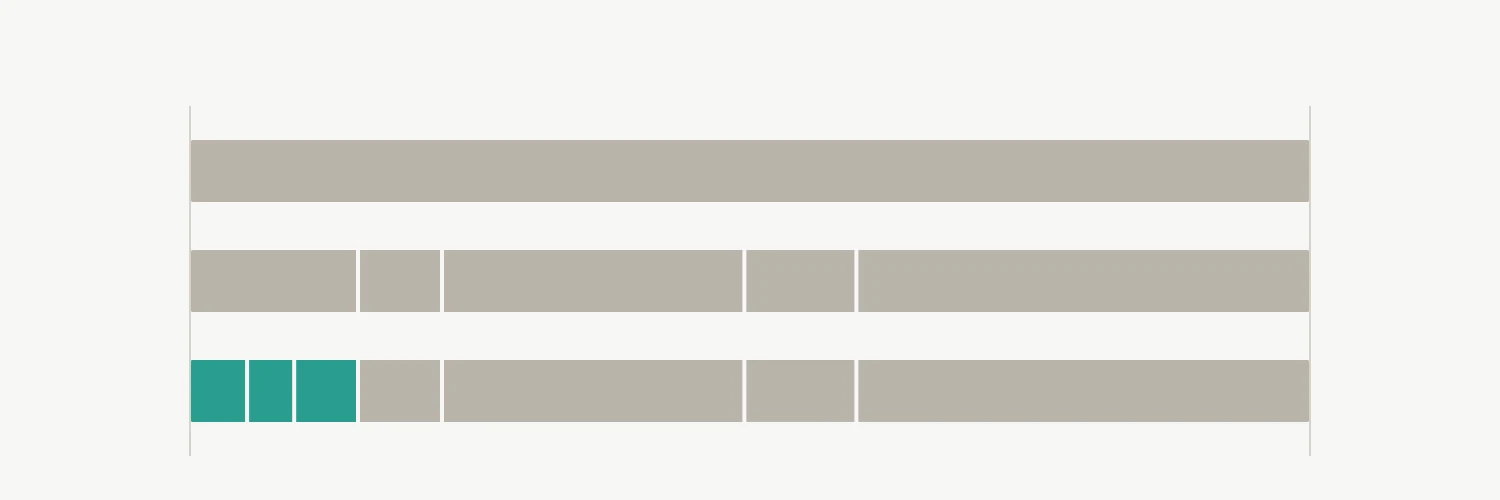
The share of All India Quota seats set aside by category is fixed: Scheduled Castes 15 per cent, Scheduled Tribes 7.5, Other Backward Classes not in the creamy layer 27, economically weaker sections 10.12 That comes to 59.5 per cent reserved and 40.5 unreserved, and those numbers are the subject of more argument than almost anything else in Indian public life.
Notice what is not argued about. The length of the bar.
Every one of those percentages is a percentage of a number set somewhere else, by people making decisions about colleges and faculty and sanctioned intake, and that number is the one this year’s movement never asked to change. The percentages are fought over in courtrooms and on the street. The total is set in a seat matrix that almost nobody reads.
Even the reserved share has a ceiling, and what happened to that ceiling is the tell. A nine-judge bench in Indra Sawhney held in 1992 that reservation should not ordinarily exceed half the available places, and for a quarter of a century that governed the arithmetic. In 2019 Parliament created a ten per cent quota for economically weaker sections on economic criteria alone, which took the total past the line, and in 2022 the Supreme Court upheld it by three to two.13
What the majority did with the ceiling is the same move again. The judgment records the arithmetic plainly: total reservation now runs to 59.5 per cent. The fifty per cent figure was not raised to accommodate that. The new quota was placed outside what the figure governs, on the reasoning that a limit worked out for caste-based reservation does not bind one resting on economic criteria.13 The number did not change. The category the number applies to did.
And the newest quota was built without the thing its supporters usually demand of the older ones. Its threshold is a gross family income below eight lakh rupees, with tests on land and housing alongside it, and it carries no measure of when it would have done its work and no date on which it ends. Anyone arguing that reservation should be temporary and tied to a metric is asking for something the most recent quota did not attempt.
Three hundred and three
Go back to the list at the bottom of the result release.
General, 2.91 lakh. OBC-NCL, 5.12 lakh. SC, 1.59 lakh. ST, 63,716. Gen-EWS, 95,026. PwBD, 3,666. PwD, 303.
Read one way, that is a table of shares, and every line in it is a position somebody holds strongly. Read another way, it is a single number cut into seven pieces, and the argument about the cuts has been running for thirty years while the number itself was decided by people who were never in the argument at all.
A movement formed in May out of a word said in a courtroom. By the end of July it had cost a cabinet minister his job in seven weeks, which is more than most movements manage in seven years, and it had done it without turning its own members against each other. Whether it can hold together through the argument it has not had yet is a different question, and an open one.
Three hundred and three candidates qualified in the smallest category on that list. The document prints the figure and moves on to the next line.
What happens to the coalition that formed around that document is not settled, and nothing written here will settle it. The argument it did not have in July is the argument now being organised, in the words of the man who wrote the shares into the Constitution. The number of chairs in the room has not changed since May.
Glossary
| Term | What it means here |
|---|---|
| AIQ | All India Quota. The share of seats in state government medical colleges surrendered to a national pool with no domicile requirement, filled on the national merit list. |
| NEET (UG) | The single national entrance examination for undergraduate medical admission. |
| NTA | National Testing Agency, which conducts NEET and publishes its results. |
| SC, ST, OBC-NCL, EWS | Scheduled Castes; Scheduled Tribes; Other Backward Classes excluding the creamy layer; economically weaker sections. The four reserved categories in the All India Quota. |
| Creamy layer | The better-off within a reserved category, excluded from the benefit so it reaches the worse-off. Long applied to Other Backward Classes; whether it should apply to Scheduled Castes and Tribes is the question now before the Court. |
| Sub-classification | Dividing a reserved category into sub-groups with separate shares, so that benefits reach the most disadvantaged within it. Held lawful in 2024. |
| Presidential List | The list of Scheduled Castes notified under Article 341 of the Constitution, which only Parliament may alter. |
| Lakh | One hundred thousand. |
| CJP | Cockroach Janta Party, founded 16 May 2026, not registered with the Election Commission. |
Sources
1. National Testing Agency, Press Release for NEET (UG) – 2026 Results, 16 July 2026, published via neet.nta.nic.in public notices. Category-wise qualified figures as given in the release.
2. On the remark of 15 May 2026, made while hearing a contempt petition concerning the process of conferring senior designation in the Delhi High Court, and on the clarification issued the following day: The Quint and Bar and Bench, which also reports the call for a protocol on reporting oral observations from the bench. The two accounts of the hearing are not in conflict. The Quint reports that “the controversy arose during the hearing of a contempt petition concerning the process of conferring senior designation in the Delhi High Court”, and that within that hearing the Chief Justice and Justice Joymalya Bagchi “questioned the authenticity of some advocates’ degrees and discussed the broader issue of fake qualifications in the legal profession”. The fake-degree subject the clarification refers to arose inside the senior-designation case, which is why the essay describes the case by its subject and the clarification by its own terms. Bar and Bench published a fuller interview with the Chief Justice on 24 July 2026, after the clarification of 16 May.
3. On the founding of the Cockroach Janta Party on 16 May 2026 and its unregistered status: Al Jazeera, 20 May 2026. On Dipke: born 29 September 1995 in Aurangabad, now Chhatrapati Sambhajinagar; a journalism degree in Pune, then an MSc in Public Relations at Boston University; worked with the Aam Aadmi Party from 2020 to 2023 on its social media and election campaign team, including meme-based digital campaigns during the 2020 Delhi Assembly elections. See WION and Business Today. The essay’s prep treated the “Boston University master’s student” description as a competing account to be rejected; it is not. He is a Boston University alumnus and a political communications strategist with prior party experience, and both are true at once. The essay describes him by his profession because that is what bears on the argument.
4. On the chronology, see 2026 Delhi Jantar Mantar protests and the reporting it collects. The demonstrations were initiated by the Cockroach Janta Party together with the All India Students’ Federation, the All India Students’ Association and the Students’ Federation of India, demanding the education minister’s resignation over the 2026 NEET paper leak and CBSE on-screen marking irregularities, alongside broader reform of how public examinations are run. Sonam Wangchuk joined on 28 June 2026 and began an indefinite hunger strike. In mid-July, following a change of leadership in the Delhi Police, barricades were removed and Wangchuk was transferred to hospital, which organisers said was against his will. On 20 July thousands marched towards Parliament in defiance of dispersal orders and were met with baton charges and tear gas. The 20 July events are also covered in this site’s earlier essay on the march and its sources, which pin the Safdarjung admission to 18 July and carry Wangchuk’s handwritten note of 20 July. On 21 July the Delhi High Court ordered his transfer to Medanta Hospital in Gurugram. Wangchuk ended the fast on the night of 23 July, after twenty-six days, on written government assurances about withdrawing cases against non-violent protesters and compensating the families of candidates who had taken their own lives; see Al Jazeera, 23 July 2026. An earlier draft of this essay dated the hospital transfer to around 19 and 20 July, described police holding sheets to block the view, and said Dipke was detained on 20 July after announcing an invitation to talks. The date was wrong, the sheets are in no source, and the detention claim was retracted by Dipke’s own spokesperson the same day, which is why the earlier essay declined to use it. All three have been removed.
5. On the resignation of 25 July 2026 and the calling off of the protests: Al Jazeera and CNN.
6. On the education portfolio being added to a serving minister on 26 July: Al Jazeera. On the task force announced the same day: Outlook. On the Bill introduced on 27 July: PIB. The paired essay sets out what the Bill does and does not do.
7. State of Punjab v. Davinder Singh, Supreme Court of India, 1 August 2024, seven-judge bench, decided 6:1, overruling E.V. Chinnaiah v. State of A.P. (2004). Bench: Chandrachud CJI, Gavai, Vikram Nath, Bela M. Trivedi, Pankaj Mithal, Manoj Misra and Satish Chandra Sharma JJ. Quotations read directly from the judgment text: the integrated-class and heterogeneity passages are at paragraph 145; the models of sub-classification are discussed at paragraphs 180 to 181; the warning about allocating the entire reservation to some categories is at paragraph 259, in a concurring opinion which refers to Chandrachud CJI in the third person and is therefore not his. An earlier draft of this note attributed that point to the Chief Justice on the strength of secondary commentary; the judgment does not support that attribution and it has been corrected. On the dissent, Trivedi J holds at paragraph 57 that “the State cannot vary the Presidential List and tinker with Article 341”, that doing so absent executive or legislative power “would be colourable exercise of powers”, and invokes the maxim “you cannot do indirectly what you cannot do directly”.
8. Confirmed against each opinion in the judgment text. Gavai J at paragraph 295: “I am therefore of the view that the State must evolve a policy for identifying the creamy layer even from the Scheduled Castes and Scheduled Tribes so as exclude them from the benefit of affirmative action.” Pankaj Mithal J at paragraph 83, agreeing: “my brother Justice Gavai has rightly concluded that the State must evolve a policy of identifying the creamy layer even from the scheduled castes and scheduled tribes.” Vikram Nath J: “I am also in agreement with the opinion of Brother Justice Gavai that ‘creamy layer’ principle is also applicable to Scheduled Castes and Scheduled Tribes, and that the criteria for exclusion of creamy layer for the purpose of affirmative action could be different from the criteria as applicable to the Other Backward Classes.” Satish Chandra Sharma J: “the identification of the ‘creamy layer’ qua Scheduled Castes and Scheduled Tribes ought to become a constitutional imperative for the State.” Note that the lead opinion goes the other way on this point, distinguishing sub-classification from the creamy layer principle on the ground that “economic advancement does not offset social discrimination faced by the Scheduled Castes”. Vikram Nath J also holds that “any exercise involving sub-classification by the State must be supported by empirical data”, which is the evidentiary requirement the body refers to.
9. On the order of 13 June 2026: a bench of Chief Justice Surya Kant with Justices Joymalya Bagchi and N.V. Anjaria sought responses from the Union government and the states on petitions filed by O.P. Shukla and the Samta Andolan Samiti seeking guidelines for excluding a creamy layer among Scheduled Castes and Scheduled Tribes, granting six weeks and stating that it was not examining the matter on merits at that stage. See Outlook and LawBeat, which agree on the bench, the petitioners, the six weeks and the merits caveat. [VERIFY] The order itself has not been read. It is an interim notice rather than a judgment, and as at 29 July 2026 it is not on Indian Kanoon; a search there for the petitioner returns nothing. Everything the essay says about it rests on those two reports agreeing.
10. Both quotations are from Dr. Babasaheb Ambedkar: Writings and Speeches, Vol. 3, read directly from the Ministry of External Affairs edition. The ladder passage is from “The Hindu Social Order: Its Essential Principles”, around p. 106: “The Hindu social order is a ladder of castes placed one above the other together representing an ascending scale of hatred and a descending scale of contempt.” The passage on why no revolution followed is from “The Triumph of Brahmanism”, around p. 320. Note on the text: the printed line reads “If is a system of permitting a share in the spoils”, an evident typesetting error for “It is”, and it is quoted here corrected. Note on the misquotation: the widely circulated version of the first passage substitutes “reverence” for “hatred”; Ambedkar’s word in this volume, in both places it appears, is hatred.
11. Neil Aurelio Nunes v. Union of India, Supreme Court of India, 20 January 2022. Authored by D.Y. Chandrachud J, bench of A.S. Bopanna and D.Y. Chandrachud JJ. The quoted passages are from the judgment text at Part E, Conclusion, paragraph 59, sub-clauses (ii) and (iii), read directly. The judgment spells “contextualized” and “reconceptualized” with a z and reads “High scores in an examination”, singular; both are preserved here against this site’s usual British spelling because they are quoted, not paraphrased. The full sub-clause continues: “In such a context, reservation is not at odds with merit but furthers its distributive consequences”.
12. The Medical Counselling Committee states that the Directorate General of Health Services conducts counselling for 15 per cent All India Quota seats in undergraduate courses and 50 per cent in postgraduate courses, and that “Reservation for 27% OBC & 10 % EWS will be made applicable in AIQ seats prospectively from 2021 vide Office Memorandum dated 30th July 2021”. The same page records that reservation under the physically handicapped category rose from 3 per cent to 5 per cent. The Scheduled Caste and Scheduled Tribe figures are the standard central percentages, stated by PIB, “Reservation Policy”, 13 February 2019: “reservation is provided to Scheduled Castes (SCs), Scheduled Tribes (STs) and Other Backward Classes (OBCs) at the rate of 15%, 7.5% and 27% respectively in case of direct recruitment on all India basis by open competition.” The Office Memorandum of 30 July 2021 itself does not appear to be published in retrievable form; the MCC’s own page is the authority relied on for its date and effect. The 1986 origin of the All India Quota is not asserted in the body pending the same sourcing.
15. On the Reservation Hatao Andolan: an anonymous, Instagram-led campaign begun in July 2026 demanding an end to caste-based reservation in education and public employment, reported to have passed 5.6 million followers within days of launching, with stated demands of merit over caste, equal fees, a uniform age limit and a common cut-off, describing itself as citizen-led and party-neutral, under the slogan “Educate, Agitate, Organise”. See Outlook India and Asianet Newsable. The account is @reservationhatamovement, whose bio describes it as “backed by citizens discarded by reservation politics, driven by merit”. On timing, the datable anchor is a video posted on 26 July 2026 announcing the start of peaceful protests, the day after the resignation. Follower counts reported across coverage in the same days range from about 5.1 million to 5.6 million, which is why the essay says “more than five million” and calls it reported rather than audited; the figure originates with the account. The essay draws no inference from the timing.
14. Bihar’s caste-based survey ran from 7 January 2023 and its data was released on 2 October 2023. Telangana’s Social, Educational, Employment, Economic and Caste Survey was launched on 6 November 2024, completed in December, and its findings released on 3 February 2025. Karnataka’s Socio-Economic and Education Survey was conducted in 2015 and was tabled in the state cabinet only on 11 April 2025, so it is an older exercise brought forward rather than a response to the 2024 judgment; the essay says these states “have each run” enumerations rather than implying they ran them for this purpose.
13. Indra Sawhney v. Union of India, 16 November 1992, nine-judge bench, which set the fifty per cent limit and introduced the creamy layer for Other Backward Classes. The Constitution (One Hundred and Third Amendment) Act, 2019, enacted 9 January 2019, created the ten per cent quota for economically weaker sections on economic criteria alone. In Janhit Abhiyan v. Union of India (2022) the Court upheld it three to two, the majority holding that the fifty per cent limit is not inflexible and applies to reservation for socially and educationally backward classes rather than to all reservation. See Supreme Court Observer. The EWS criteria are set out in the judgment itself, quoting Office Memorandum F. No. 20013/01/2018-BC-II of 17 January 2019 from the Ministry of Social Justice and Empowerment: families with “a gross annual income less than Rs.8 lakhs, or agricultural land less than 5 acres, or residential flat less than 1,000 sq. ft., or residential plot less than 100 sq. yards in the notified Municipalities, or residential plot less than 200 sq. yards in the areas other than the notified Municipalities”. The judgment also states that after the amendment “the total reservation is now to the extent of 59.50%”. Both read directly from the judgment text. The operative holding on the ceiling is at paragraph 102(c) of Maheshwari J.’s opinion, which answers that the ten per cent “in addition to the existing reservations does not result in violation of any essential feature of the Constitution of India and does not cause any damage to the basic structure of the Constitution of India on account of breach of the ceiling limit of fifty per cent. because, that ceiling limit itself is not inflexible and in any case, applies only to the reservations envisaged by Articles 15(4), 15(5) and 16(4) of the Constitution of India”. That is the second limb the essay describes: the new quota sits outside the ceiling rather than raising it. Indra Sawhney is read directly from the judgment text, which holds that “reservation under Clause (4) of Article 16 shall not exceed 50% of the appointments or posts, barring certain extra-ordinary situations”. Worth noting that the ceiling was never stated as absolute even in 1992, which is part of why the 2022 majority could find it “not inflexible” without overruling it.
Share feedback
No public comments. If you want to share a reaction or correction, send it here.